Meet Arjun.
An ordinary walk through the city.

Bengaluru. A quiet weekday morning.
Scroll down to read the story
He notices something.
A pile of garbage is blocking the sidewalk.

Discarded days ago. Spilling over the curb into the roadway.
“Who is supposed to clean this?”
He asks people nearby.

Nobody really knows.
So he does what most people do.
He takes a picture.
Framing the issue with his phone camera.
Posts it on X.
A brief broadcast into the public square.
Tags the authorities.
Hoping the right handle sees the mention.
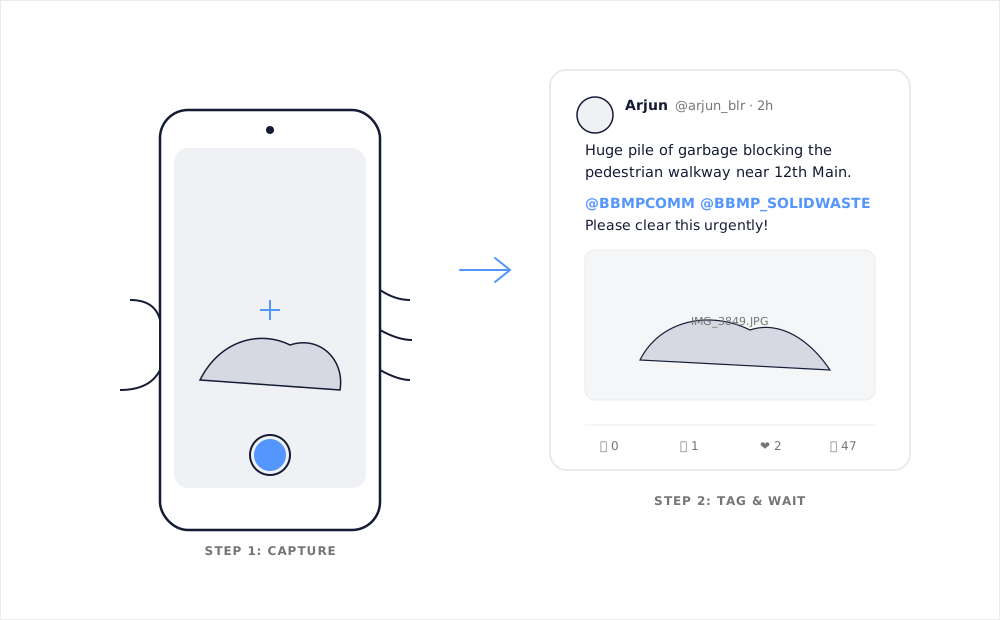
A broadcast sent into the void. Without receipt. Without an owner.
No response.
Nothing.
No notification. No acknowledgement.Still nothing.
Post sinks down the algorithm.The garbage is still there.
Accumulating dust and waste.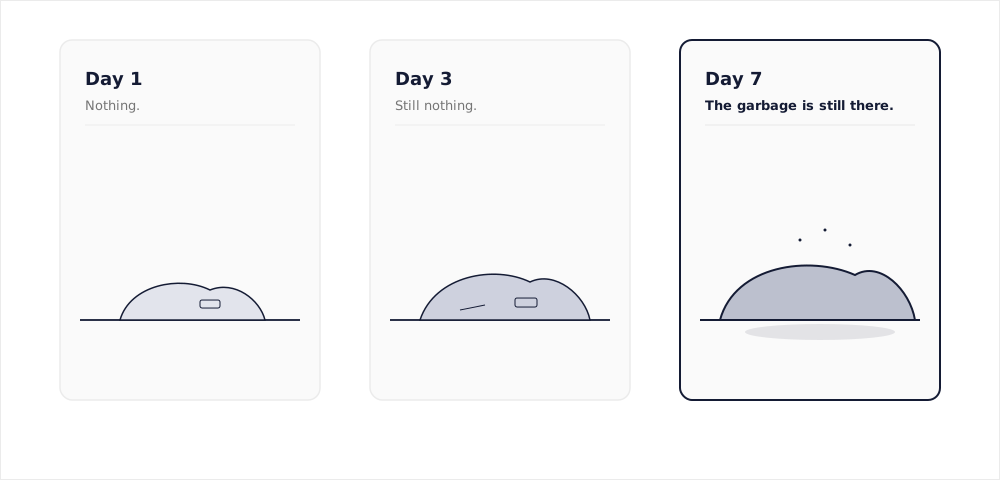

“I reported it.”
“But who owns it now?”
The complaint was submitted. But the accountability was lost the moment the post was published.
What if I could see who received my complaint?
What if they had to acknowledge it?
What if I could see what they were doing about it?
What if I could verify that it was actually fixed?
Civicc.
A closed-loop civic accountability platform that treats public complaints not as dead tickets, but as living, verifiable civic commitments.
He sees another problem.
Sewage is leaking onto the road.

A broken municipal drain. Overflowing onto active traffic.
This time, he opens Civicc.
A fluid, camera-first civic experience designed for the street.
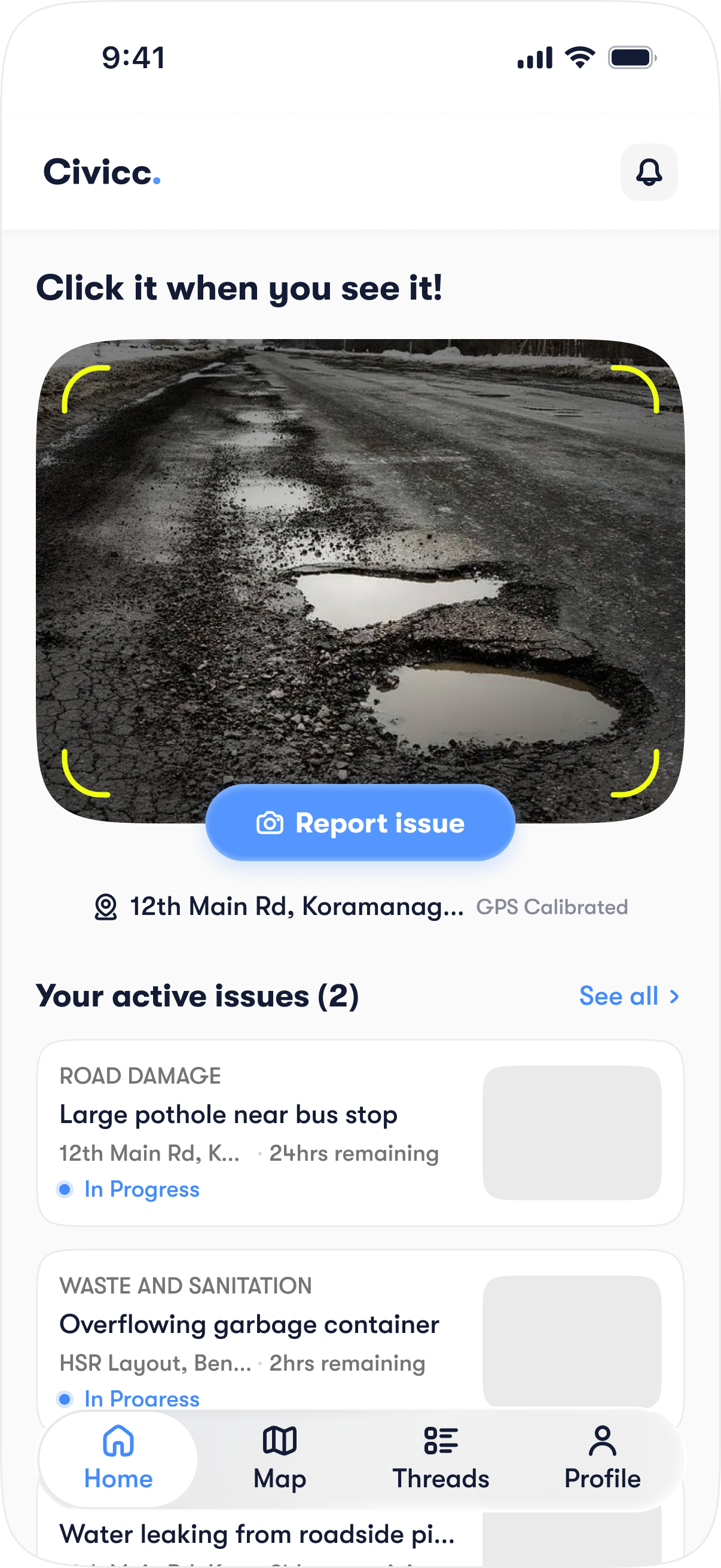
Capture the problem.
No forms. No searching for departments. Just capture what you see.
The camera is the intake form. By removing cognitive barriers, Civicc turns a momentary frustration into an immediate civic act.
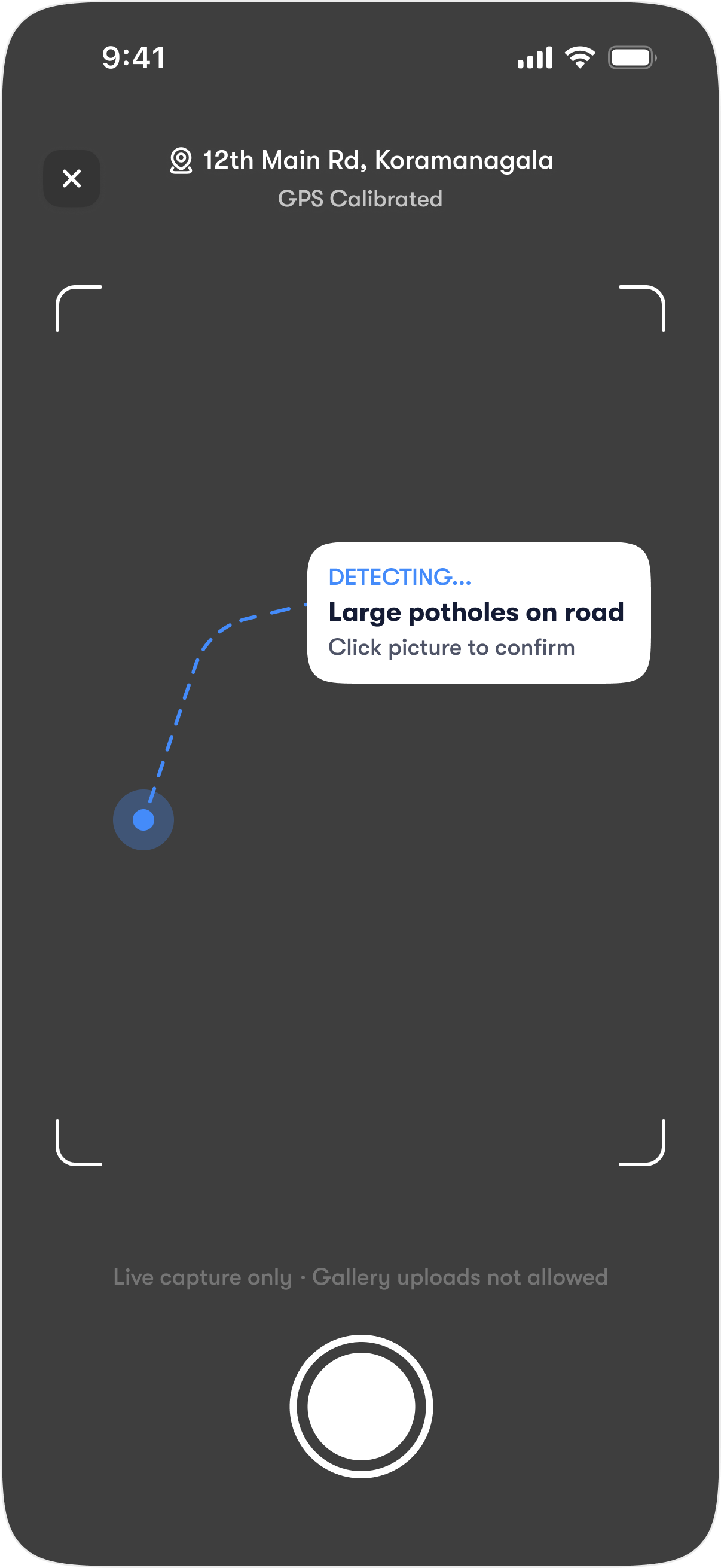
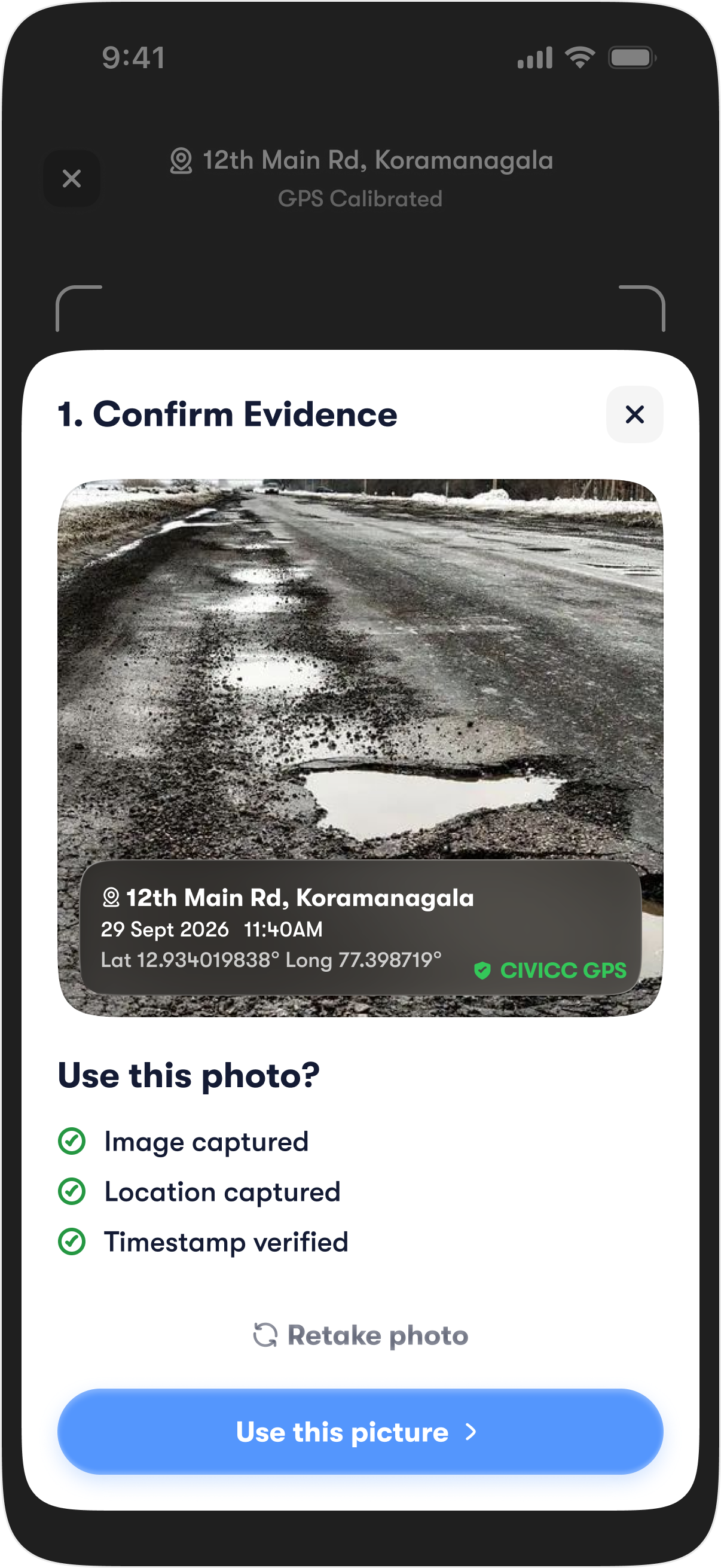
The evidence carries context.
Location, time and image evidence are captured together.
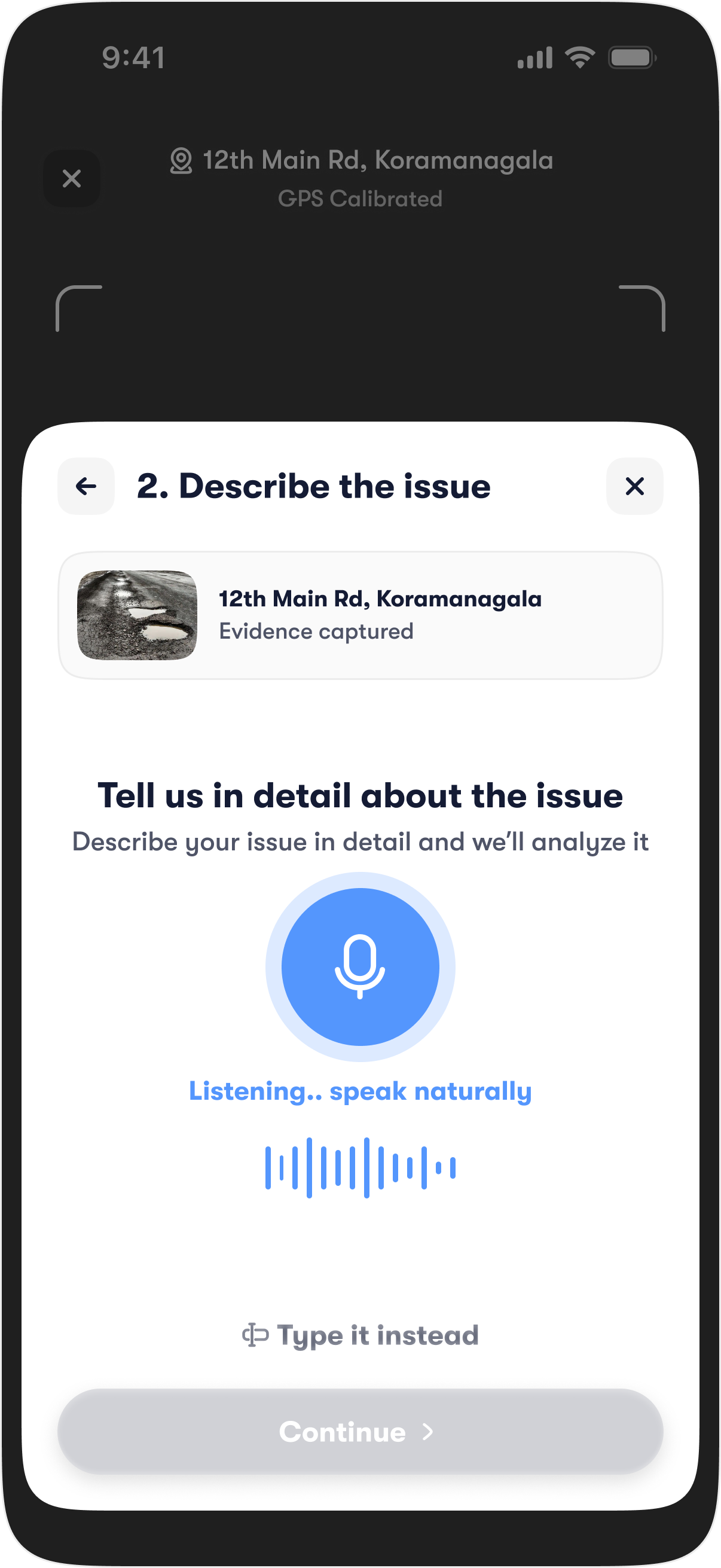
Tell Civicc what happened.
Speak naturally instead of filling out a long complaint form.
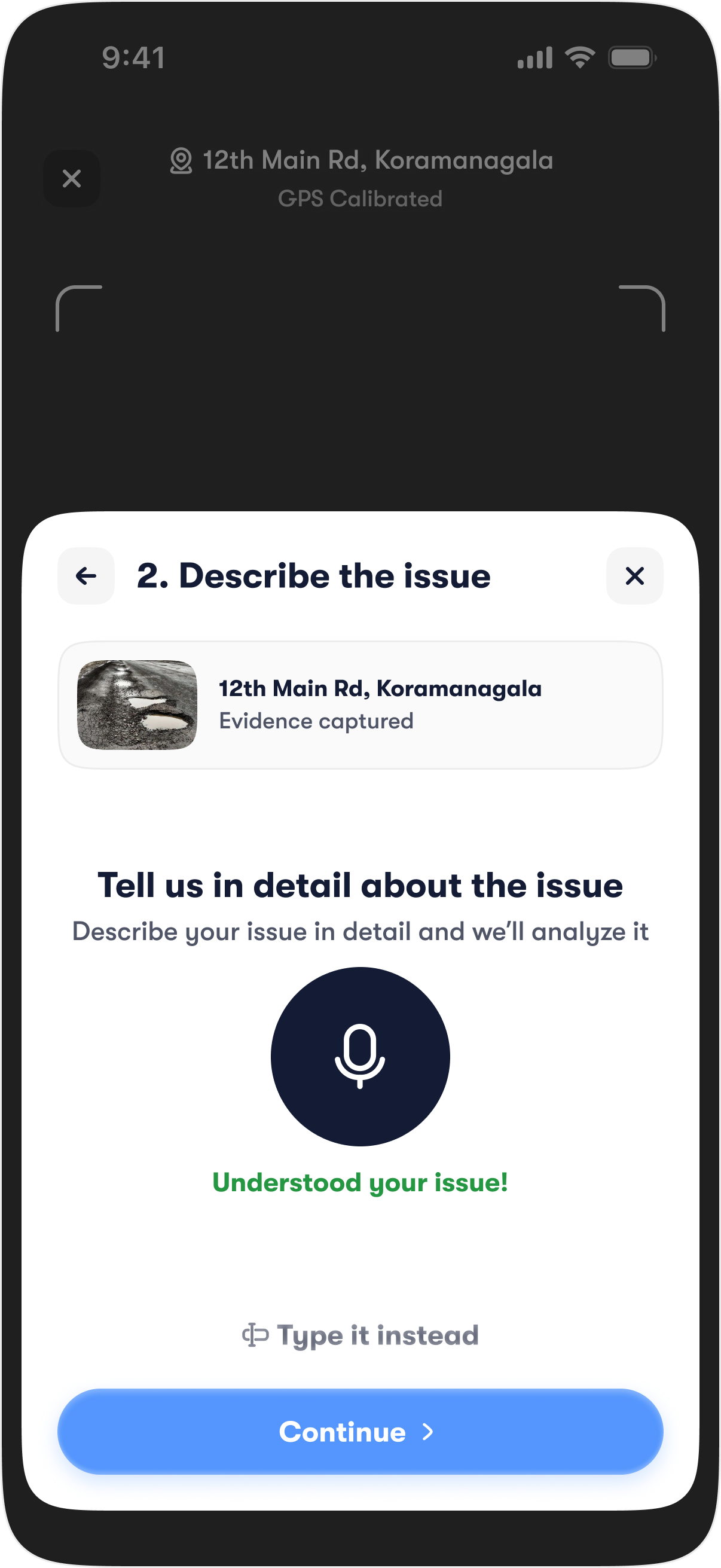
“Understood your issue.”
Transcribing street context into structured municipal parameters.
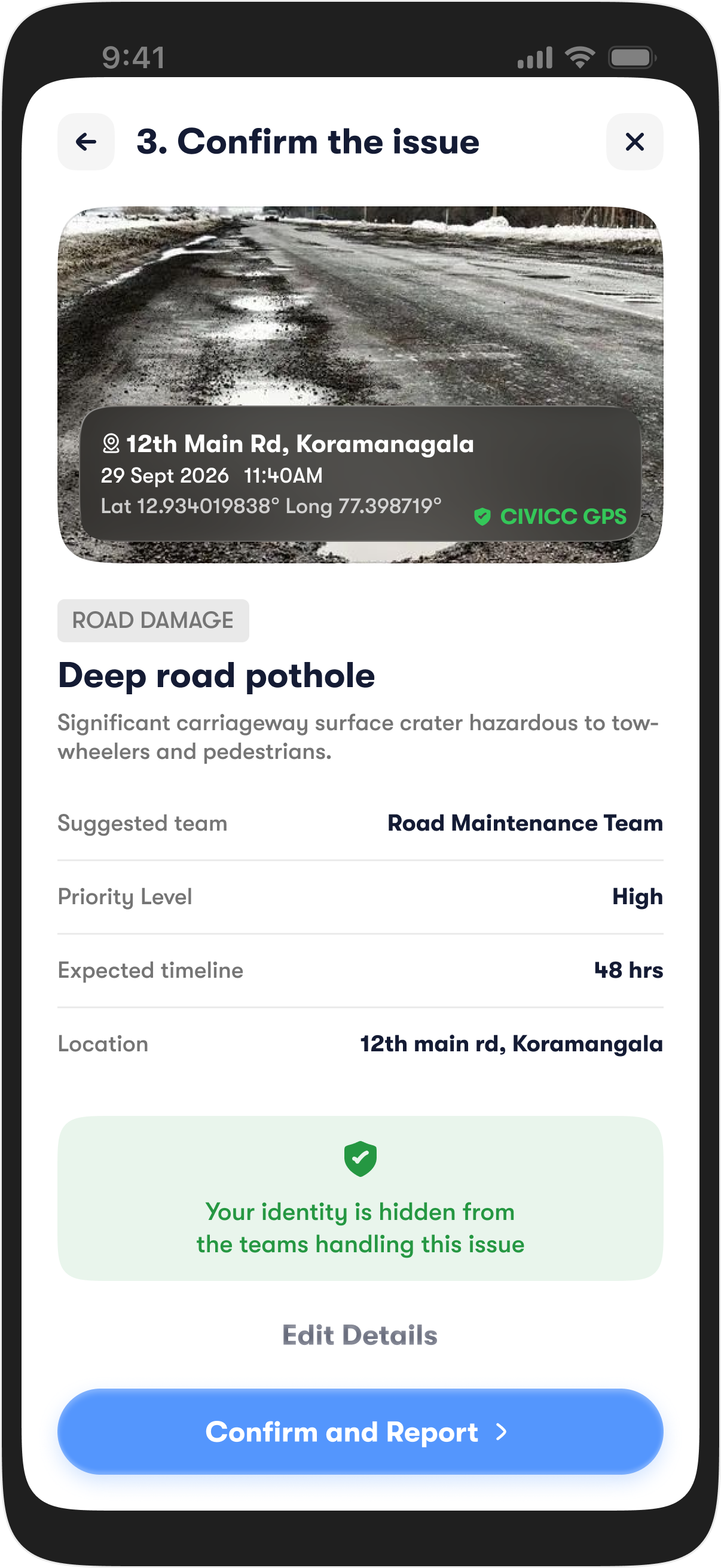
Civicc understands the issue.
The system suggests the category and relevant team. The citizen stays in control.
Civic technology fails when AI operates as an opaque black box. Civicc surfaces the reasoning directly: the citizen validates the municipal assignment before it enters the workflow.
The complaint now has an owner.
Drainage Maintenance Team
Ward 112 · Central Division · SLA: 24hInstead of disappearing into a generic complaint inbox, the issue is routed to the team responsible for acting on it.
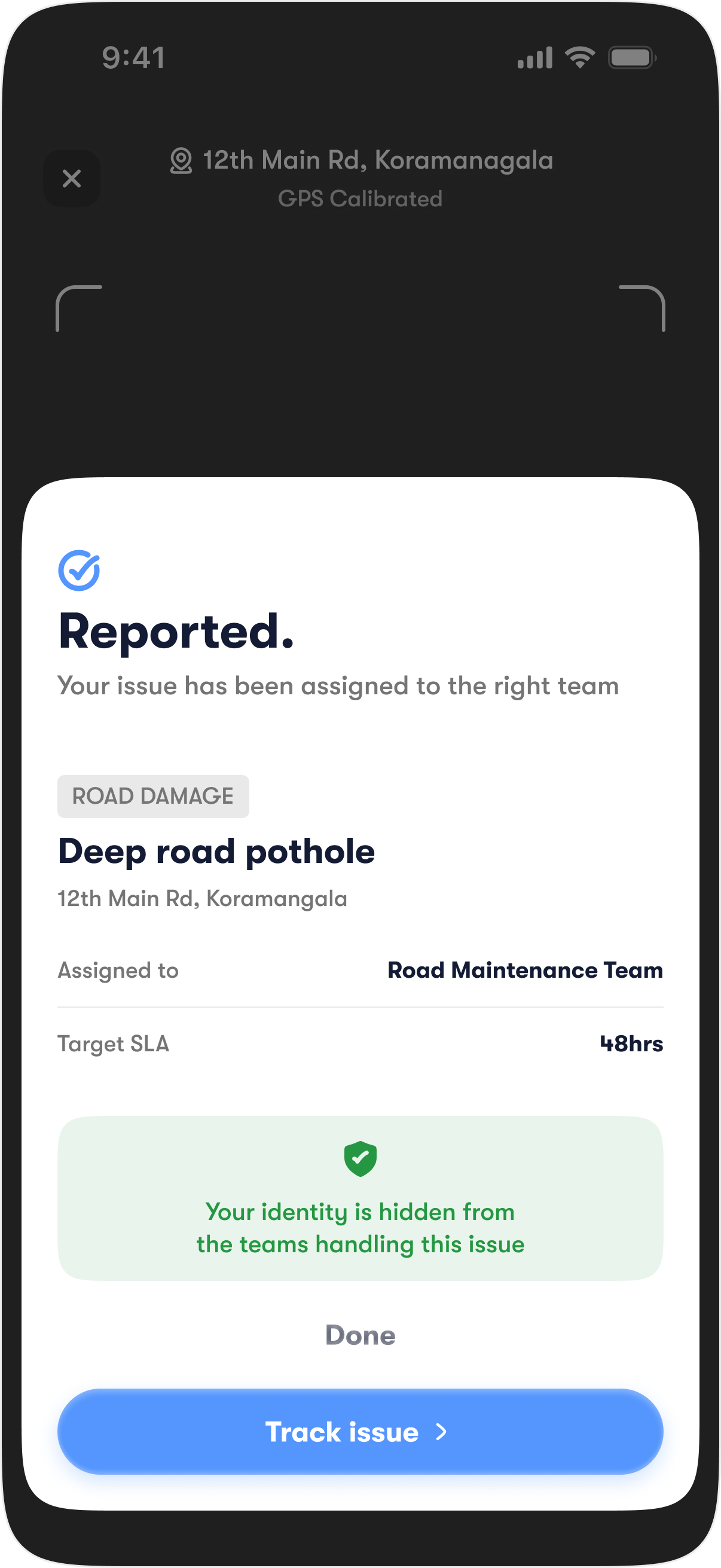
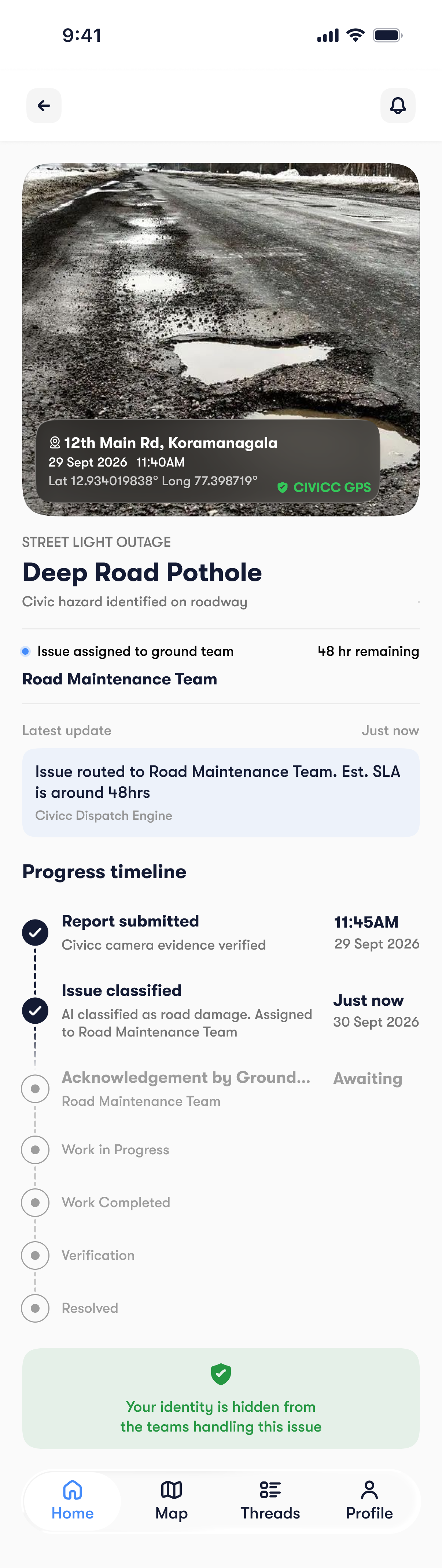
And now, he can see what happens.
The complaint is not a ticket. It is a living, continuous thread.
Reported
09:42 AM
Evidence and geolocation captured by Arjun.
Assigned
10:15 AM
Routed to Drainage Maintenance Unit 4.
In progress
02:30 PM
Field technician on-site. Drain clearing underway.
Work completed
05:40 PM
Contractor uploads proof of masonry fix.
Verification
Next Morning
Citizen inspection required to close case.
Resolved
Closed
Independent audit confirmed. Loop closed.
“They say it's fixed.”
“But is it?”
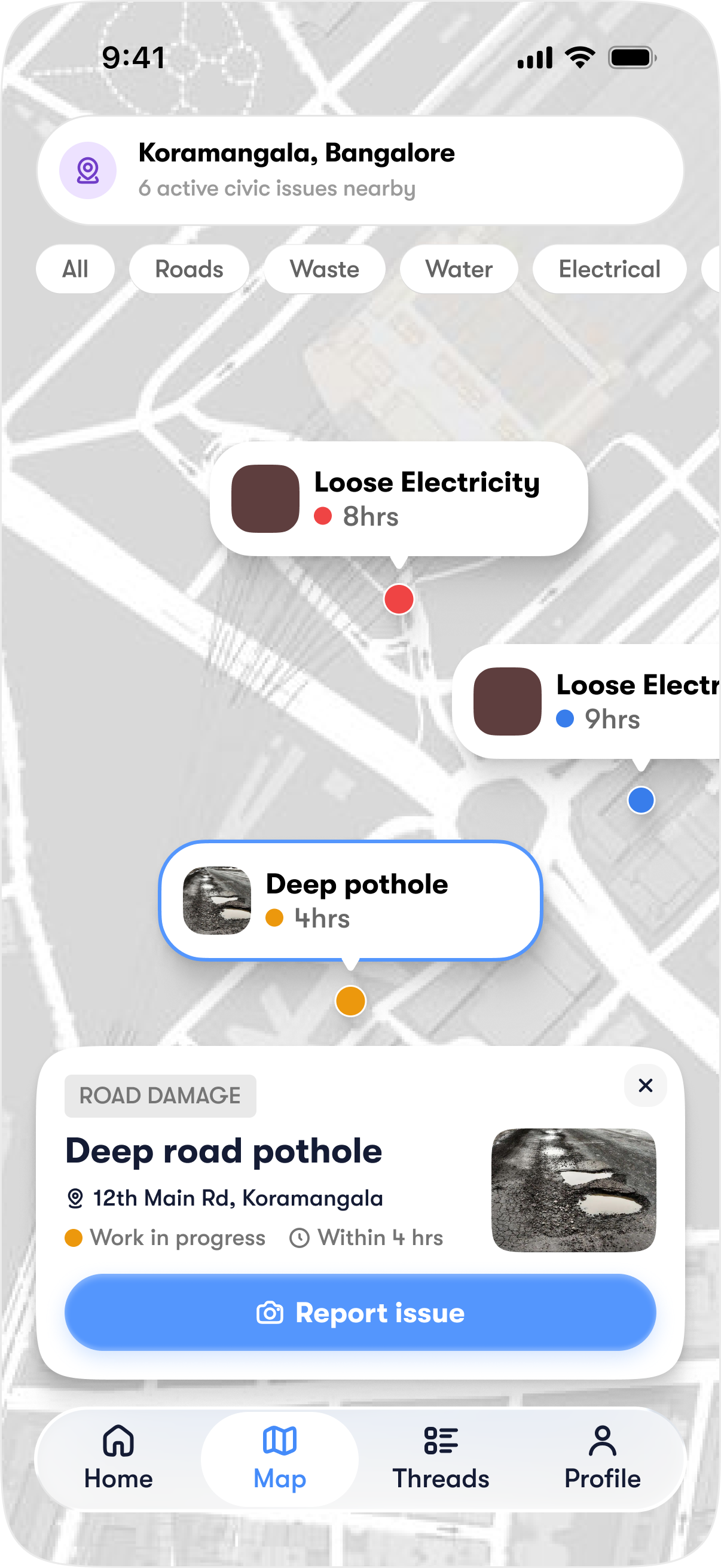
Civicc closes the loop with fresh evidence.
A resolution isn't real just because an official marked a checkbox. It is resolved when the citizen or local community verifies the physical fix on the ground.
24 hours later.

Repaired drain. Clean curb. A pedestrian path restored.
This time, he knew what happened.
Someone was accountable for making it happen.
Closing the loop.
From silent submission to complete public verification.
One report can change more than one street.
Civicc is designed around five core structural shifts.
Visibility
People can see what happens after reporting. Complaints no longer vanish into bureaucratic silences.
Ownership
Every issue has a named, responsible municipal team rather than an anonymous centralized portal.
Accountability
Progress, timestamps, and SLA timers remain publicly visible to the neighborhood and ward administration.
Verification
Resolution can be independently verified with photographic proof by the reporter or local peers.
Community participation
People can follow, upvote, and contribute fresh updates to existing issues in their vicinity, turning individual complaints into collective civic care.
How would I know this works?
Proposed UX & civic performance metrics to evaluate real-world product effectiveness.
Proposed Success Metrics · Design FrameworkReport completion rate
Percentage of initiated issues that submit without drop-off via camera intake.
Time to acknowledgement
Elapsed hours between citizen submission and municipal team confirmation.
Time to resolution
Mean working hours to execute ground repair and deploy field fix.
Verified resolution rate
Proportion of marked fixes ratified by photo confirmation from citizens.
Reopen rate
Frequency of complaints disputed or reopened due to incomplete work.
Community participation
Ratio of neighborhood users following, commenting, and auditing nearby issues.
% of reported issues that reach verified resolution
Submission volume is vanity. Only closing the loop with verified ground truth reflects true civic impact.
Behind the interface.
A few decisions that shaped Civicc.
Why camera-first?
“Reporting a civic issue shouldn't feel like filling out a government form.”
Traditional municipal portals present 14-field dropdown forms that exhaust citizen patience before submission. By anchoring the entire flow in the camera lens, the action becomes instinctive: see, point, capture.
Why evidence metadata?
“Evidence shouldn't be added after the report. It should be created as part of the report.”
Attaching camera-roll photos from hours ago disconnects municipal crews from ground coordinates. Civicc binds location, timestamp, and visual proof instantaneously at the moment of shutter press.
Why threads?
“A complaint is usually treated as a ticket. Civicc treats it as a living thread.”
A ticket is binary: open or closed. A thread is an ongoing conversation between citizens, ward engineers, and contractors with timestamped milestones, photos from the field, and accountability checkpoints.
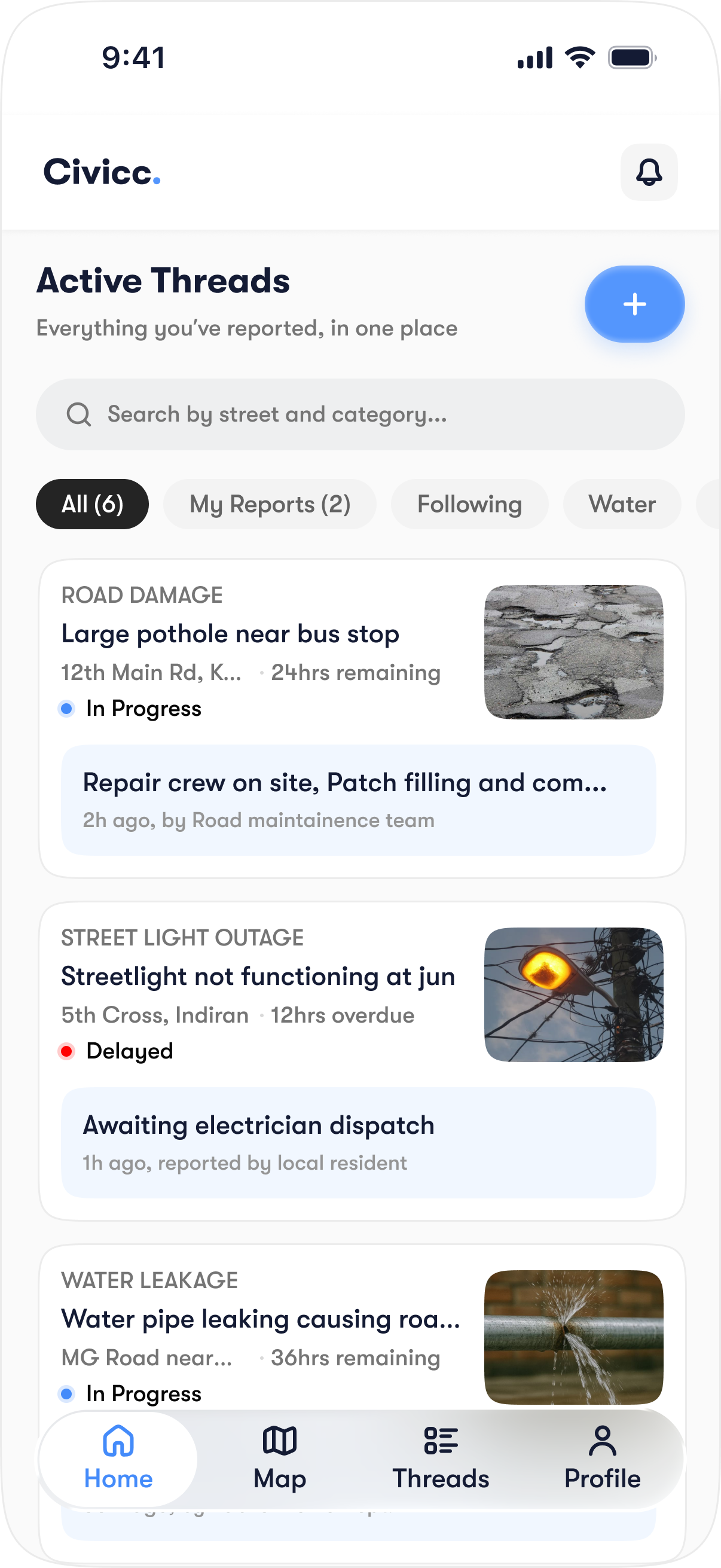
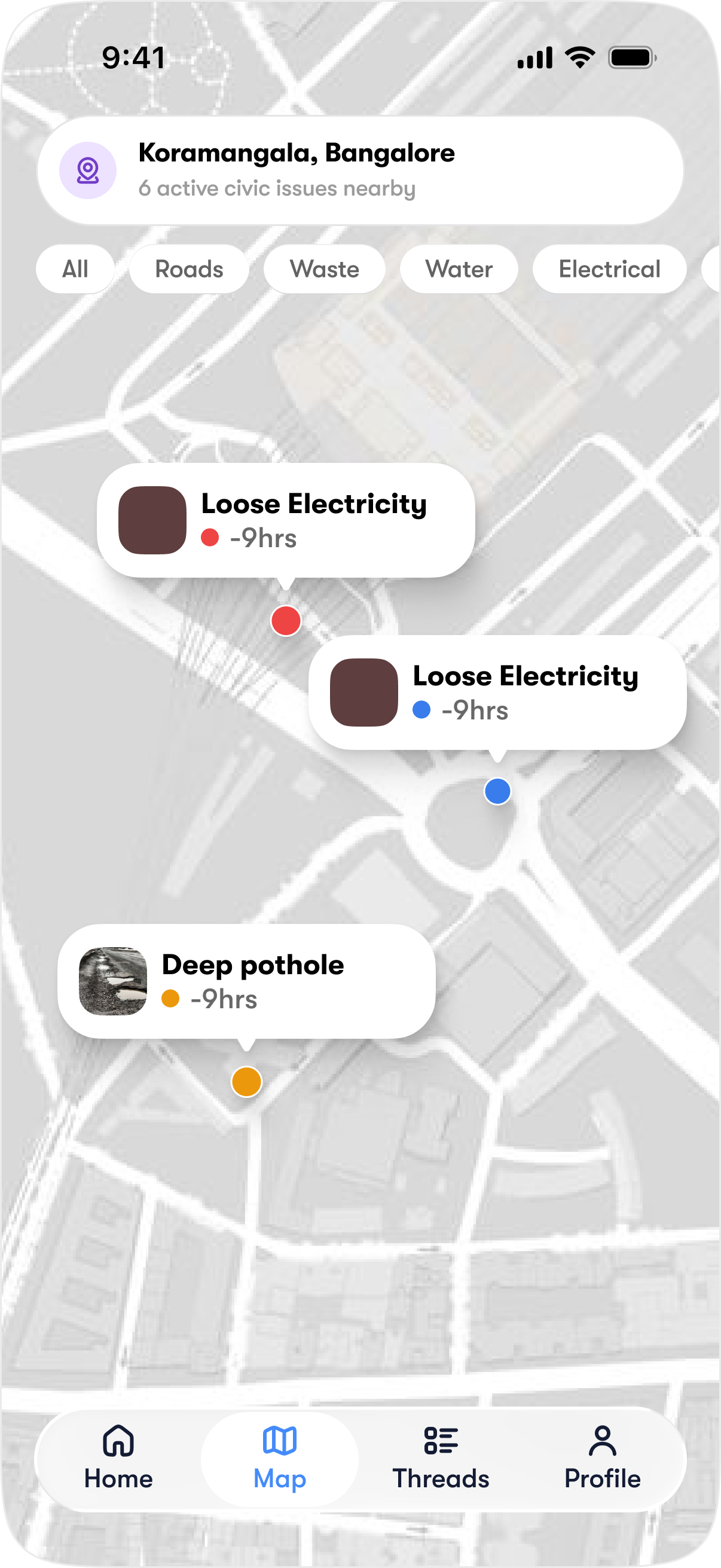
Why a map?
“Civic issues aren't isolated tickets. They're things happening around us.”
The map allows people to understand what is happening nearby and participate beyond the issues they personally reported. It prevents duplicate tickets and helps communities mobilize around systemic cluster issues.
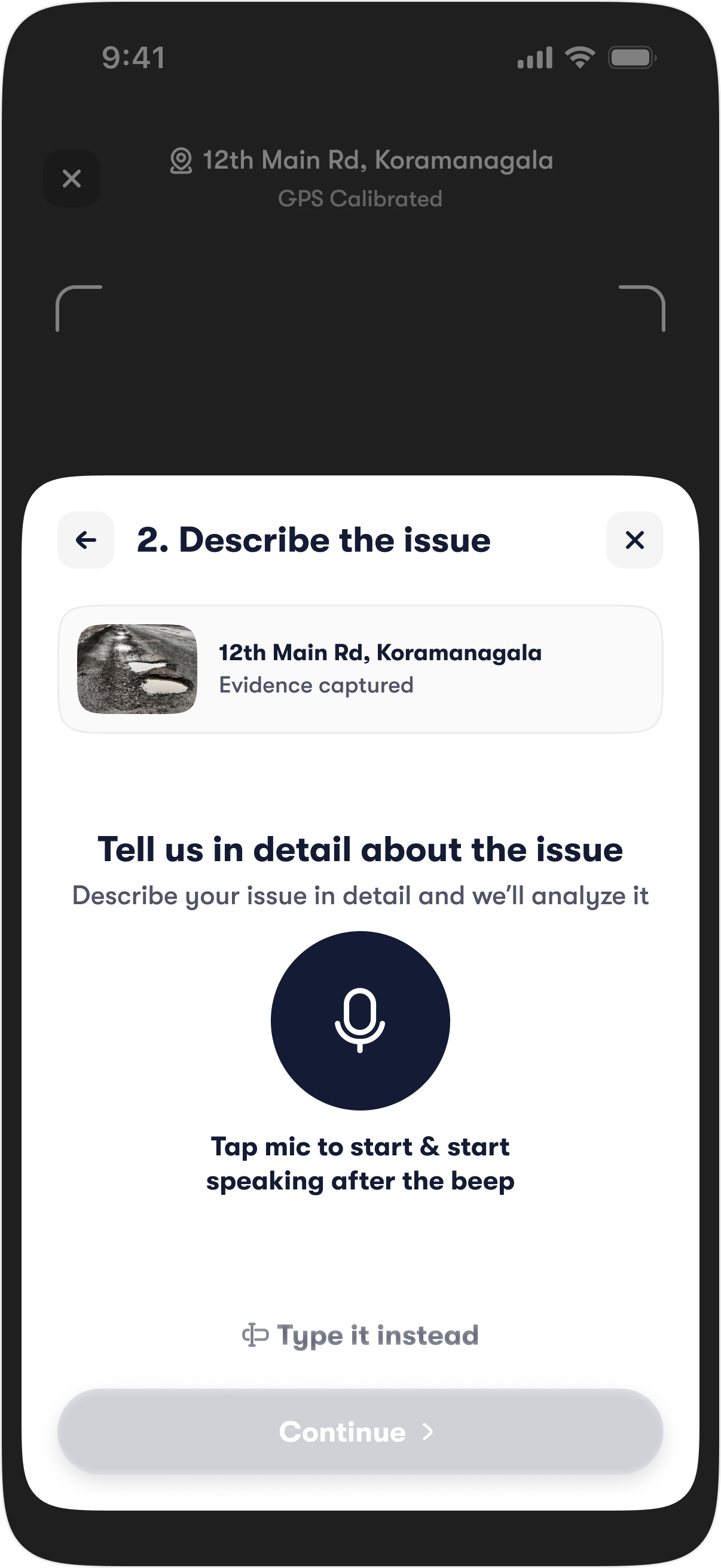
Why bottom sheets?
“The reporting experience stays grounded in the physical problem.”
Instead of moving through disconnected full-screen forms, Civicc progressively layers evidence, description, understanding, and confirmation directly over the live camera context.
The Civicc Interface System.
A cohesive ecosystem engineered for citizens and municipal teams.
Civicc
Report once
See what happens
Verify the fix
A closed-loop civic accountability experience
Interactive vibe-coded prototype
Figma file for UI